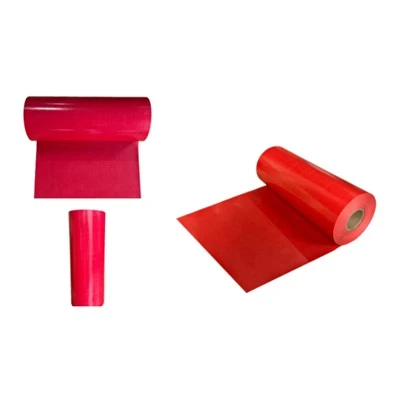
Insulating tubing prevents current from flowing through or between conductive components, protects cables from short circuits, and ensures the safe, efficient, and reliable operation of systems and components across various sectors-including construction, automotive, aerospace, and electronics.
It is widely utilized in the electrical and electronics fields for the insulation protection of electrical equipment such as transformers, motors, and generators. Thanks to its superior electrical insulation and heat-resistance properties, it effectively prevents issues such as short circuits and electrical leakage, thereby enhancing the safety and reliability of the equipment.
In the construction sector, it is primarily used for the insulation protection, support, and secure fastening of wires and cables. Its characteristics-including corrosion resistance, moisture resistance, and fire resistance-make it an ideal material for the installation of wiring and cabling within buildings.
It also finds extensive application in the realm of sporting goods, such as fishing rods, archery equipment, and snowboards. These sporting goods require both robust structural safety and an excellent user experience; insulating tubing, with its smooth, uniform surface (free of irregularities) and inherent flexibility, is well-suited to meet these specific requirements.
In the solar energy sector, it is primarily employed for the support and secure mounting of solar panels. Given its high strength, corrosion resistance, and fire-resistant properties, it serves as a critical material in the installation of solar panel systems.
Furthermore, insulating tubing is utilized in demanding environments involving telecommunications equipment, medical devices, and aerospace systems. Specific application scenarios also extend to laboratory tubing, chemical processing, analytical instrumentation, emissions monitoring, cryogenic and high-temperature applications, automotive painting processes, and automotive cable and hose assemblies.