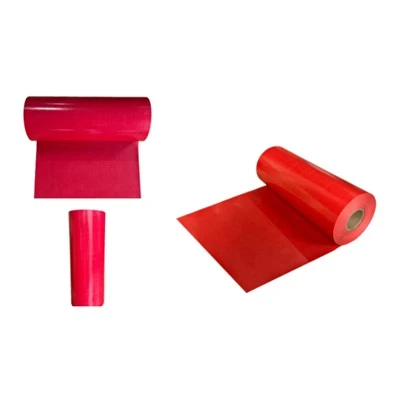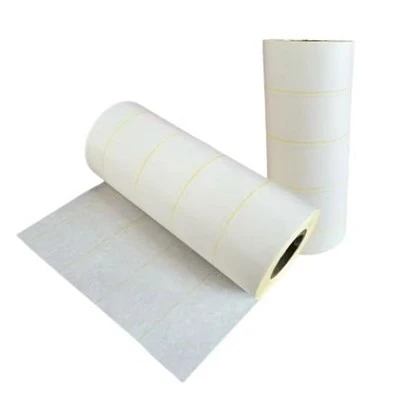
Definition and Composition of Prepregs: The "Semi-Finished Product" of Composite Materials
A prepreg is a sheet-like or tape-like material produced by pre-impregnating reinforcing fibers (such as carbon fibers or glass fibers) with a resin matrix (such as epoxy or phenolic resin). Its core characteristics are as follows:
Two-Component Structure: It must contain two distinct types of materials-fibers and resin-thereby satisfying the fundamental definition of a composite material (a combination of at least two materials with different properties).
Uncured State: The resin exists in a semi-fluid or "B-stage" (partially cured) state; it requires subsequent thermal compression molding to be transformed into a final product.
According to the standards set by the American Society for Testing and Materials (ASTM D3878), a composite material is defined as a "macroscopic multiphase material comprising a combination of two or more materials with different physical or chemical properties." Prepregs fully meet this definition; however, their unique characteristic lies in the fact that they represent an intermediate form of a composite material, rather than a directly usable end product.
Distinctions and Connections Between Prepregs and Traditional Composite Materials
Functional Positioning:
Traditional composite materials (such as carbon fiber plates) are finished products ready for direct application;
Prepregs serve as "raw materials" within the manufacturing process, requiring secondary molding (e.g., via autoclave processing) to realize their full performance potential.
Performance Advantages:
The resin content in prepregs can be precisely controlled (typically ranging from 35% to 45%, according to a 2021 study published in *Composites Part A*), thereby ensuring the uniformity of the finished product;
Fiber orientation can be pre-designed (e.g., unidirectional or woven), making it easier to achieve high-performance characteristics compared to composite materials formed via direct mixing.
Role in Industrial Applications: From Intermediate to High-Performance Core
Prepregs account for over 60% of the materials used in the aerospace sector (according to a 2023 report by Grand View Research). Typical examples include:
Boeing 787 Dreamliner: The main wing structure utilizes carbon fiber prepregs, achieving a 20% weight reduction while simultaneously enhancing structural strength;
F1 Racing Chassis: Prepregs feature a short molding cycle (approximately 2 hours), making them ideally suited for applications requiring high performance in small-batch production runs.