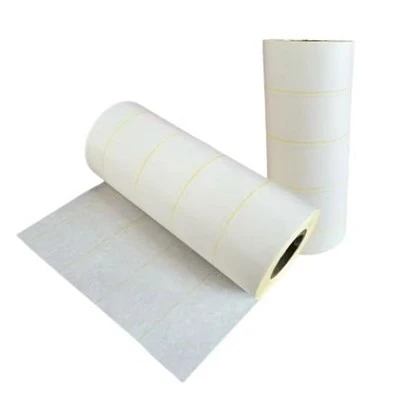
The primary characteristic of insulating paper is its exceptional electrical insulation performance. Possessing extremely high resistivity, it conducts virtually no current when subjected to an electric field; consequently, it effectively isolates live components from grounded parts, thereby preventing short circuits and leakage currents. Its insulating capabilities can be further enhanced-to accommodate the requirements of various voltage levels-by adjusting the paper's thickness and number of layers, as well as by combining it with dielectric media such as oil or resin.
Secondly, it exhibits excellent mechanical properties and flexibility. The fibrous structure of insulating paper is dense and elastic; this allows it to withstand processing operations-such as winding, layering, and compression-while simultaneously resisting the stress fluctuations caused by vibration and thermal expansion and contraction during the operation of motors and transformers. This inherent toughness ensures the long-term, stable operation of the equipment.
Thirdly, it demonstrates robust resistance to heat, moisture, and chemical agents. Insulating paper does not readily soften or decompose in high-temperature environments; it maintains its insulating efficacy even when exposed to humid conditions or immersed in oil, and it possesses a significant degree of resistance against most chemical media.