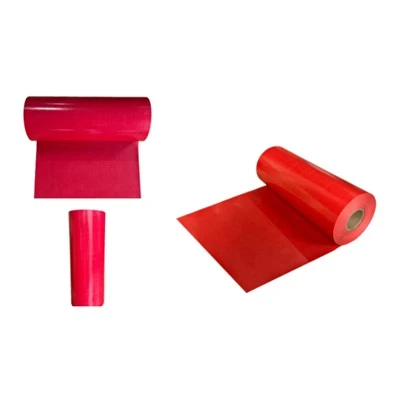
Reinforcement Materials
The primary requirements for reinforcement materials used in prepregs are:
Good wettability with the resin;
Good conformability (drapability), to meet the molding requirements for products with complex geometries;
The ability to satisfy the key performance requirements of the final product.
Reinforcing fibers include glass fibers, carbon fibers, aramid fibers, and others. Common forms of reinforcement structures include unidirectional fibers, plain weave fabrics, twill weave fabrics, and multiaxial fabrics.
Matrix Materials
The primary functions of the matrix resin are:
To orient, position, and bond the fibers together into a cohesive unit;
To transfer stress throughout the product when it is subjected to mechanical loads.
Generally, it is difficult for a single resin to satisfy all process-related performance requirements; therefore, a combination of several resins is typically employed to facilitate processing operations-for instance, combining different types of epoxy resins to adjust the viscosity of the resin system at ambient or low temperatures. Phenolic-type epoxy resins can enhance the reactivity and thermal stability of the resin system, while Bisphenol A-type epoxy resins can be used to regulate its viscosity. Research indicates that the optimal resin system for prepreg applications involves a synergistic blend of liquid Bisphenol A-type epoxy resin, solid Bisphenol A-type epoxy resin, and phenolic epoxy resin.
The selection of matrix materials must strike a balance between the performance requirements of the composite material itself and the demands of the manufacturing process. For example, a fundamental requirement for medium-temperature hot-melt epoxy prepregs is that they remain non-tacky to the touch during the summer months and do not become brittle during the winter. This necessitates adjusting the proportions of the various components within the resin system to ensure that its softening point falls within the range of 36–37°C in summer and 30–32°C in winter, while simultaneously controlling the curing temperature of the epoxy resin. The optimal curing temperature typically ranges from 120°C to 130°C, with a curing time not exceeding 90 minutes.
Curing System
The curing system comprises curing agents, accelerators, catalysts, and diluents, among other components. Given the application requirements for prepregs-specifically the need for them to possess a certain shelf life at room temperature-the curing system typically employs latent curing agents. These agents do not react with the resin under standard temperature and pressure conditions; however, when subjected to specific elevated temperatures and pressures, they catalyze the cross-linking and curing of the resin. This mechanism facilitates the stable storage of prepregs at ambient temperatures. Such curing agents are typically of the dispersed type; that is, they exist as solids at room temperature and remain insoluble within the epoxy resin matrix. However, upon being heated to temperatures approaching their melting points, they become miscible with the epoxy resin, thereby initiating a rapid curing reaction.
The primary function of accelerators is to facilitate the dissolution of the curing agent within the resin matrix and to increase the rate of the curing reaction. Toughening agents are incorporated to mitigate the inherent brittleness of the thermosetting resin matrix and to enhance its impact resistance. Diluents serve primarily to reduce the viscosity of the resin, thereby improving its processability. Catalysts are principally utilized to accelerate the resin's reaction during the curing and molding phase; however, under standard temperature and pressure conditions, they too remain in a "latent" state-a characteristic that proves highly advantageous for the practical manufacturing operations involving prepregs.