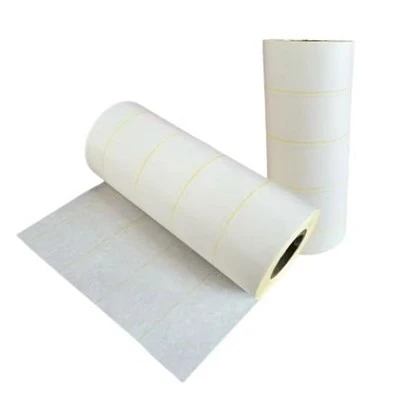
The production process for insulating paper typically utilizes high-quality wood pulp or cotton pulp as raw materials. These materials undergo meticulous pulping and bleaching treatments to remove impurities and short-fiber fragments, thereby ensuring the purity and uniformity of the paper. During the pulping stage, the fiber length, distribution, and moisture content of the pulp slurry must be strictly controlled, as these factors directly influence the final paper's mechanical strength and insulating properties.
The papermaking process constitutes the core stage of insulating paper production. The processed fiber slurry is uniformly spread onto a papermaking machine to form a wet sheet, which then undergoes pressing and drying stages to remove moisture while maintaining uniform thickness and density. Particular attention is paid during this process to fiber alignment and paper compactness, as these factors directly determine the insulating paper's dielectric strength and mechanical toughness.
Following the drying stage, the insulating paper typically undergoes coating or impregnation treatments-such as oil immersion or the application of insulating resins-to further enhance its voltage resistance and thermal stability. Concurrently, every production batch is subjected to rigorous testing for parameters such as thickness, tensile strength, resistivity, and dielectric breakdown voltage to ensure that the paper's performance meets the specific requirements for electrical equipment applications. Once wound, slit, and packaged, the insulating paper is transferred to storage, awaiting subsequent utilization in the manufacturing of electrical equipment.